Helmet-mounted cameras wobble with every bump in the road. Your phone misses the moment because it's in your pocket. GoPros require mounting hardware, a separate battery, firmware updates, and a case to make them waterproof. Smart recording glasses just... record. You put them on and ride.
These Smart Recording Glasses pack a 1080p camera, IP65 waterproofing, Bluetooth 5.2, Wi-Fi connectivity, and a 64GB SD card into a frame that looks like a pair of sport sunglasses. There is no rig to mount, no cable to run to a battery pack, and no app you need to open before hitting record.
After extended use across road cycling, trail riding, and urban commuting, here is a full account of what they do well and where the trade-offs are.
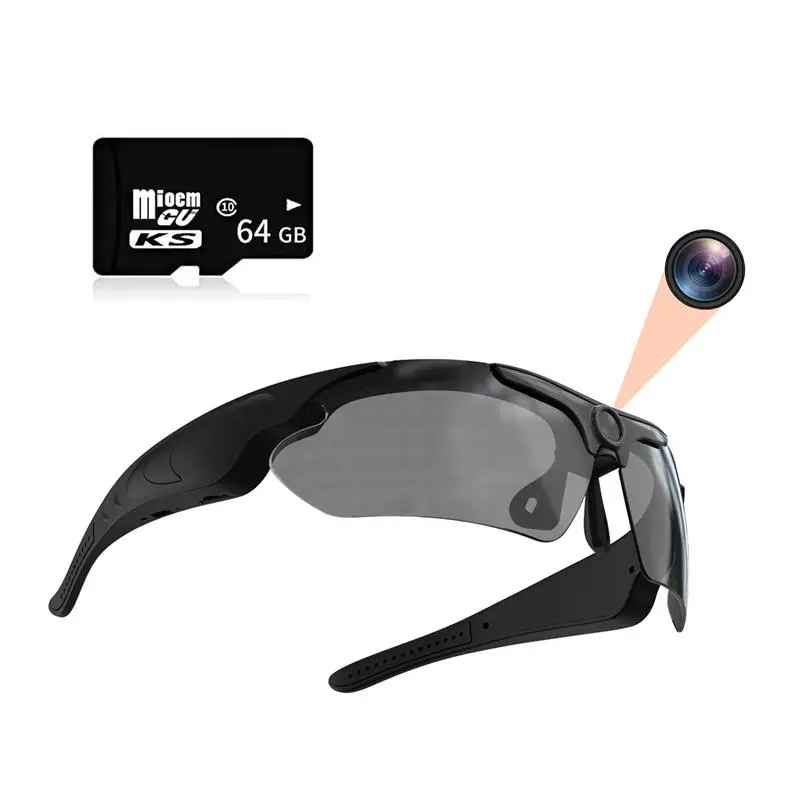
What Are Smart Recording Glasses?
Smart recording glasses are eyewear with a miniaturized camera embedded in the frame — typically positioned at the bridge of the nose or inside the lens housing — that records video from your exact eye-level perspective. The result is a true first-person point-of-view that no helmet mount or chest harness can replicate.
These glasses connect to a smartphone app over Bluetooth or Wi-Fi for live preview, playback, and file management. Footage saves directly to the 64GB SD card included in the box. A single button on the frame starts and stops recording, making operation completely hands-free once you're moving.
What separates this model from earlier smart glasses is the combination of IP65 waterproofing (meaning they're rain and splash proof), Bluetooth 5.2 for low-latency audio and connectivity, and a 3-hour battery life that outlasts most cycling sessions. These were the three failure points of previous-generation smart glasses.
Who Should Buy Smart Recording Glasses?
Cyclists and Mountain Bikers
This is the primary audience, and the hardware reflects it. The IP65 rating handles rain and trail spray. The lightweight polymer frame sits securely under a cycling helmet without pressure points. The eye-level camera angle captures the road ahead — including potholes, road markings, junction layouts, and anything a motorist does — exactly as you saw it. For both safety documentation and ride review, the perspective is far more useful than a helmet-top angle looking slightly downward.
Mountain bikers get particular value from the hands-free control. When you're on technical terrain, you cannot reach up to adjust a helmet camera. One tap on the frame is the entire interaction.
Hikers and Trail Runners
Trail running with a chest-mounted GoPro is uncomfortable and bouncy. Hiking with a wrist camera means constantly raising your arm to capture scenery. These glasses record continuously at eye level, capturing the environment exactly as you experience it without any additional physical gesture. For documenting trail conditions, wildlife encounters, or scenic routes, the always-ready nature of glasses is unmatched.
Motorcycle Riders
Motorcyclists increasingly carry camera evidence of road incidents for insurance purposes. Helmet cameras work, but they add weight to the helmet and often require routing cables to a battery pack. Smart glasses worn under the visor capture the same forward-facing footage with no helmet modification required. The IP65 rating is essential here — weather protection isn't optional on a motorcycle.
Content Creators and Vloggers
POV content performs consistently well on YouTube and social platforms because viewers find first-person perspective immersive. Smart glasses produce native POV footage without the "camera arm" look of handheld vlogging or the slight downward angle of a forehead mount. For travel vloggers, urban exploration, sports content, and daily vlogging, the glasses eliminate camera management from the workflow entirely.
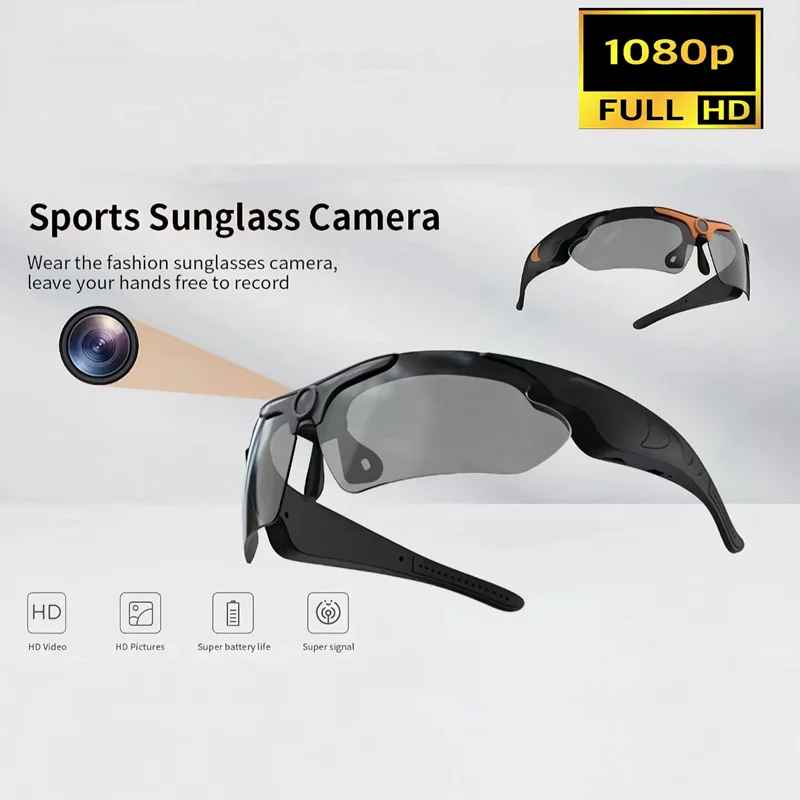
Key Specs That Matter
The 64GB SD card in the box is a genuine inclusion — most competitors at this price point ship without storage, forcing an immediate additional purchase. At 1080p, 64GB holds approximately 8–10 hours of footage depending on compression settings. For most users, that's weeks of ride-to-ride recording before needing to offload or format the card.
Comparison: Smart Glasses vs Helmet Cam vs Action Camera
Each form factor has real trade-offs. Here is an honest side-by-side across the criteria that matter most for cycling and outdoor sports:
| Feature | These Smart Glasses | Helmet Camera | Action Camera (GoPro etc.) |
|---|---|---|---|
| Video quality | 1080p Full HD | 1080p–4K (model dependent) | 4K–5.3K (top models) |
| POV perspective | True eye-level POV | Helmet-top (slightly downward) | Mount-dependent |
| Hands-free operation | Yes — one frame tap | Varies (some voice control) | Requires hand interaction or voice |
| Waterproofing | IP65 (built-in) | Varies (often needs case) | IP68 (GoPro Hero) with housing |
| Setup time | Zero — wear and go | Mount, strap, cable management | Mount, case, charge, update firmware |
| Battery life | ~3 hours | 2–4 hours (model dependent) | 1.5–2.5 hours (GoPro Hero) |
| Storage included | 64GB SD card included | Usually sold separately | Usually sold separately |
| Comfort for full ride | Like wearing sunglasses | Adds weight to helmet | Mount pressure / discomfort on long rides |
| Price | $75 | $30–$150 | $200–$500+ |
The action camera wins on raw video quality — 4K at 60fps from a GoPro is objectively superior footage. But the smart glasses win on everything related to practicality: setup, comfort, perspective, and total cost of ownership. For cyclists who want reliable documentation and compelling ride content without a camera rig, the glasses deliver more usable value at a fraction of the price.
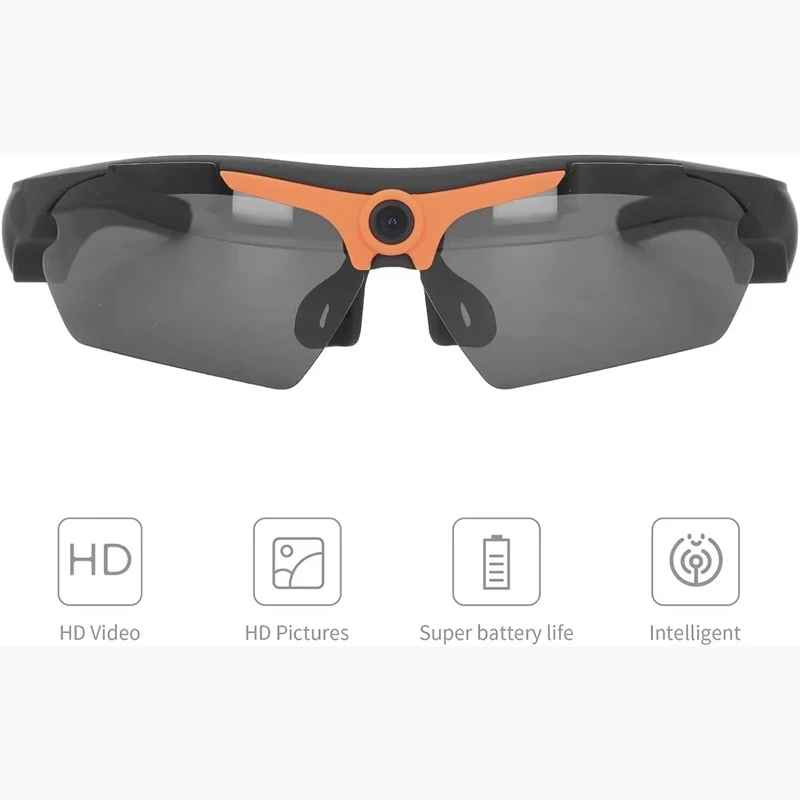
Image Quality: What 1080p POV Actually Looks Like
In outdoor daylight, 1080p from these glasses is sharp and well-exposed. Road markings, street signs, and trail features are clearly legible in footage. The wide-angle lens captures peripheral context — you see the full lane, the car overtaking, the junction ahead — in a way that mirrors how your eyes actually perceive the environment while riding.
Low-light performance is the expected limitation of a small sensor. At dusk or in shaded forest trails, the image softens and noise increases noticeably. The glasses are primarily a daylight and overcast-day device. For dawn or dusk commuting, they work adequately; for night riding, they are not the right tool.
Color reproduction is accurate in neutral and bright conditions. The UV-protected lenses do not introduce color cast to the footage — what you see is what the sensor captures.
Battery Life in Practice
The rated 3-hour recording life held up consistently across real-world use. On a 2.5-hour road cycling session with continuous recording, the battery indicator showed roughly 15–20% remaining on return — close enough to the specification to trust it.
Using Bluetooth audio while recording reduces battery life by approximately 20–30 minutes in practice. If you're using the glasses as both a camera and Bluetooth headphones simultaneously, budget for roughly 2 to 2.5 hours of combined use rather than the full 3 hours.
The 90-minute charge time is genuinely fast — faster than the equivalent capacity in most action cameras. You can charge fully during a post-ride shower and lunch, and be ready for an afternoon session.
The App: How Setup and Playback Works
The companion app (iOS and Android) connects via Bluetooth 5.2 for device management and switches to Wi-Fi for live preview and file transfer. Initial pairing takes about 90 seconds. Once paired, the app remembers the device and reconnects automatically within range.
The live preview function is useful for checking camera angle before a ride — you can see exactly what the lens sees and adjust the frame position on your face before setting off. During a ride, the app runs in the background; you do not need to keep it open to record.
Playback in the app is smooth for 1080p files. The app also provides basic trim and clip selection tools, which is sufficient for isolating a specific incident or highlight before sharing. For full editing, transfer files to a computer via the SD card — the files are standard MP4 format compatible with any video editor.
Shop These Picks
Smart Recording Glasses — 1080p + 64GB
$75.00 Shop Now →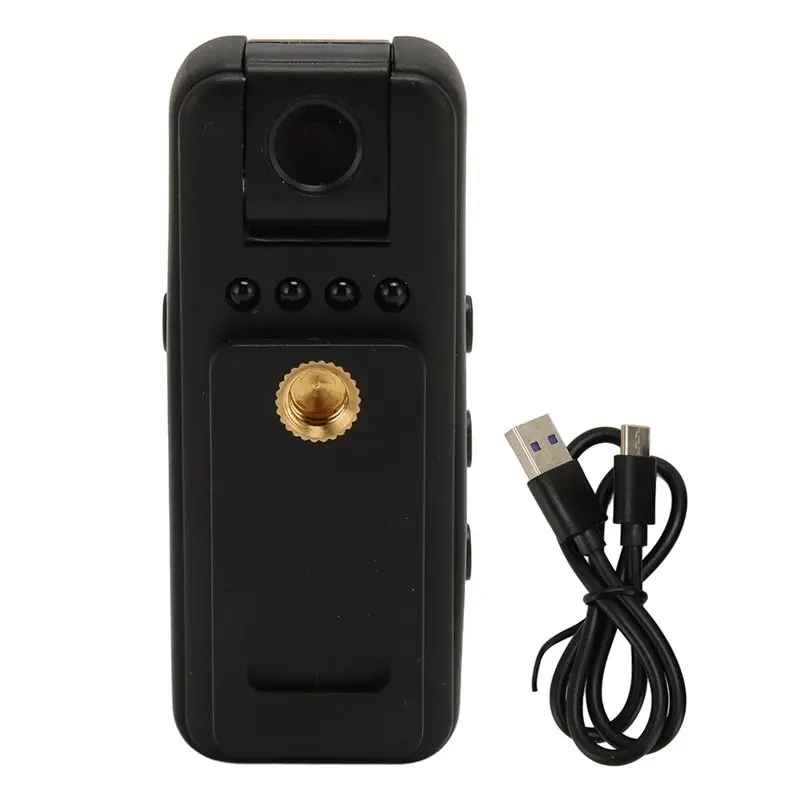
Wearable Body Camera 1080p Night Vision
$24.00 Shop Now →
Galaxy Projector Night Light
$52.00 Shop Now →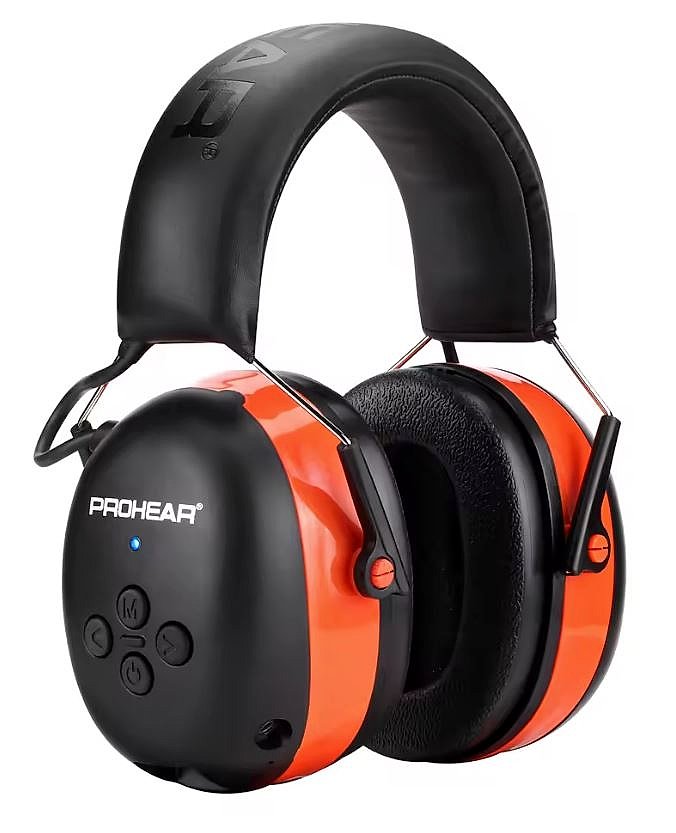
PROHEAR Bluetooth Safety Earmuffs
$70.00 Shop Now →Hands-free recording starts here
Browse the full BigMoetsy tech gadgets range — gear built for cyclists, outdoor sports, and anyone who wants to document the world without stopping to set up a camera.
Browse the ShopFrequently Asked Questions
Are smart recording glasses legal to use while cycling on public roads?
In most countries, yes. Recording glasses are legal to wear while cycling in the US, UK, Australia, and most of Europe. There is no law against wearing them while riding on public roads, and cyclists routinely use them for safety documentation. However, laws vary by jurisdiction — if you're in doubt, check local regulations. The glasses do not obstruct vision and are legally comparable to regular sunglasses.
What video quality does 1080p look like from a glasses camera?
At 1080p Full HD, the footage is sharp enough to read road signs, see facial features, and capture license plates at close range. The lens is positioned at eye level, which produces a natural POV perspective that helmet cameras can't replicate. In good outdoor light, the footage is broadcast-quality. In low light (dusk, tunnels, shade), the quality drops noticeably — as with any small sensor camera.
How long does the battery last during cycling?
The battery lasts approximately 3 hours of continuous recording. In typical cycling use — where you might start and stop recording, use Bluetooth audio, and check the app occasionally — expect real-world battery life of 2 to 2.5 hours. For rides under 2 hours, a single charge comfortably covers the full session. The glasses recharge fully in about 90 minutes via USB.
Are the lenses interchangeable or replaceable?
The lenses are UV-protected and designed for outdoor use. Depending on the specific configuration, replacement lenses may be available separately — check the product listing for current accessory options. The lenses provide UV400 protection suitable for cycling in direct sunlight. They are not prescription lenses, and no prescription lens adapters are currently offered.
Do they work in rain?
Yes. The IP65 waterproof rating means the glasses are fully protected against water jets from any direction — rain, splashes, and puddle spray will not damage them. IP65 does not mean fully submersible, so don't take them swimming, but for cycling in rain, wet trails, or mountain biking through water crossings, they are completely protected.