Your ceiling is either a blank void or the cosmos. For the same price as a few streaming subscriptions, this projector makes the choice obvious. The 13-in-1 Galaxy Projector Night Light doesn't just cast a few stars on your wall — it layers constellations, planetary rings, nebula clouds, and deep-space color fields into a full immersive environment. Whether you're winding down in a bedroom, soothing a restless baby, or setting the scene in a living room, this thing delivers a genuinely spectacular effect that has to be seen to be believed.

What Is the 13-in-1 Galaxy Projector?
At its core, the Galaxy Projector Night Light is a compact, whisper-quiet device that sits on a surface — nightstand, dresser, shelf — and projects outward in a wide arc. The "13-in-1" refers to 13 distinct projection modes that can be used individually or layered in combination. This is where it diverges from cheaper single-mode star projectors that just throw a static field of white pinpoints and call it a day.
The 13 modes span five categories:
- Classic constellation maps — accurate star patterns from major constellations: Orion, Ursa Major, Cassiopeia, and more, projected with fine-point precision
- Planetary silhouettes — ringed Saturn profiles, Jupiter's disc, and abstract planetary shapes that drift slowly across the surface
- Nebula color layers — soft, gradient washes of deep purple, teal, amber, and crimson that simulate the gas clouds seen in Hubble imagery
- Star map fields — dense, randomized pinpoint fields that evoke the Milky Way on a clear night far from city lights
- Combined layered modes — the most impressive category, stacking two or three effects simultaneously so you get star fields behind constellation lines inside a nebula glow
The device rotates slowly in auto-rotate mode, which adds gentle motion and prevents the projection from feeling static or screensaver-like. Brightness is adjustable across multiple levels, and the color palette can be locked to a single hue or set to cycle through a full spectrum automatically.
Who Is This For?
Bedroom Ambiance Seekers
If you're someone who struggles to switch off at night, ambient lighting can make a real difference. The galaxy projector replaces harsh overhead light with a soft, enveloping environment that naturally cues the brain toward rest. Set it to a slow-rotating nebula mode at low brightness and it becomes the kind of atmospheric backdrop that streaming services charge ten dollars a month to approximate. It's genuinely better than a candle without the fire hazard.
Nurseries and Kids' Rooms
This is arguably the projector's strongest use case. Young children are endlessly fascinated by stars and planets, and having the cosmos on their ceiling transforms bedtime from a battle into something they look forward to. The timer function (30, 60, or 90 minutes) means it shuts off automatically after your child falls asleep. The light levels at the lowest setting are soft enough not to disrupt sleep once the eyes close, and the silent operation means there's no fan hum to compete with.
Home Theaters and Living Rooms
Before a movie, during a dinner party, or as a permanent ambient feature in a media room, the galaxy projector adds production value that's wildly disproportionate to its $52 price tag. Set it to planetary mode with a slow color cycle and it turns a plain living room into something that genuinely impresses first-time guests.
Gift Buyers for Space Enthusiasts
If you have someone on your list who lights up at anything space-related — astronomy hobbyists, science fiction fans, kids who want to be astronauts — this is the gift. It's visual, interactive, and not another piece of branded merchandise that ends up in a drawer. At $52, it hits the sweet spot of feeling genuinely substantial without requiring a budget conversation.
Setting Up the Galaxy Projector
Setup is about as simple as it gets. Plug it in, set it on a flat surface, and point it toward the ceiling or a wall. No mounting hardware, no calibration, no app pairing required. The unit handles all projection geometry internally.
A few practical notes on placement:
- Ceiling projection: Works best in rooms with ceilings up to 10 feet. Place the unit at floor level or on a low surface and angle it upward. The projection fans out as distance increases, so lower placement creates a fuller coverage area.
- Wall projection: More focused and slightly brighter. Better for smaller rooms or situations where you want a focal point rather than full-room coverage. Ideal for desktop or desk-adjacent use.
- Distance and coverage: At 6 feet of throw distance, expect roughly 8–10 feet of projected diameter. At 10 feet, coverage expands to fill most standard bedroom ceilings completely.
- Brightness: The highest brightness setting is vivid enough to navigate a dark room. The lowest is soft enough for a sleeping infant. Three levels gives you enough range for almost any situation.
13 Projection Modes — What Each One Looks Like
The 13 modes break down into four broad visual families, and cycling through them is half the fun of owning this device:
Constellation maps (modes 1–3) cast sharp, accurate star patterns onto the ceiling with thin connecting lines tracing the classic shapes. These are the "educational" modes — the ones that actually help you learn where Orion and the Big Dipper sit relative to each other. Running one of these at low brightness while falling asleep has a quietly meditative quality.
Planetary modes (modes 4–6) project large, softly rendered planetary silhouettes that drift slowly across the surface. Saturn's rings are immediately recognizable. These are the most "wow" modes when someone first walks into a room — large, slow-moving shapes carry a different visual weight than pinpoint stars.
Nebula color modes (modes 7–9) fill the room with gradient color washes that shift slowly between deep violet, teal green, and warm amber. No distinct shapes — just atmospheric color. Think of these as the "mood lighting" modes. Paired with music, they're striking.
Combined layered modes (modes 10–13) are the headliners. These stack star fields, constellation lines, and nebula colors simultaneously to create a full-depth effect. Mode 12, in particular, combines a dense star field with a rotating planetary silhouette inside a purple nebula wash — the result looks like something rendered by a film production house. This is the mode you show people first.
Galaxy Projector vs Alternatives: Comparison
| Feature | Galaxy Projector (13-in-1) | Planetarium Projector | LED Star Lamp |
|---|---|---|---|
| Price | $52 | $120–$400+ | $15–$25 |
| Number of modes | 13 | 3–5 | 1–2 |
| Nebula / color layers | Yes | Rare | No |
| Auto-rotate | Yes | Sometimes | No |
| Timer function | 30/60/90 min | Sometimes | Rarely |
| Silent operation | Yes | Sometimes | Yes |
| Nursery safe | Yes | Varies | Yes |
| Room coverage (10ft ceiling) | Full room | Full room | Partial |
Is $52 Worth It for a Galaxy Projector?
Short answer: yes, easily. The $52 price point puts this in impulse-buy territory for a lot of people, and the quality of the projection — particularly in the combined layered modes — genuinely exceeds what you'd expect at this price. Dedicated planetarium projectors start at $120 and rarely include the nebula color modes that make this one so visually distinctive. LED star lamps at $15–25 offer a fraction of the versatility and none of the atmospheric depth.
The value proposition is clearest as a gift: $52 gets you something that will be used and enjoyed repeatedly, creates a genuine experience rather than gathering dust, and impresses in person in a way that a product photo can't fully convey. Over 300 units sold is a meaningful signal for a specialty product — these aren't impulse purchases people return.
The one legitimate caveat: if you're expecting precise astronomical accuracy for educational use — the kind of thing an astrophysics enthusiast would demand — this isn't a scientific instrument. The constellations are recognizable and reasonably accurate, but the primary value is visual experience, not star mapping. For anyone buying for atmosphere, ambiance, or gifting, it delivers at a price that makes it a genuinely easy call.
Featured Products
Galaxy Projector Night Light — 13-in-1
$52.00 Shop Now →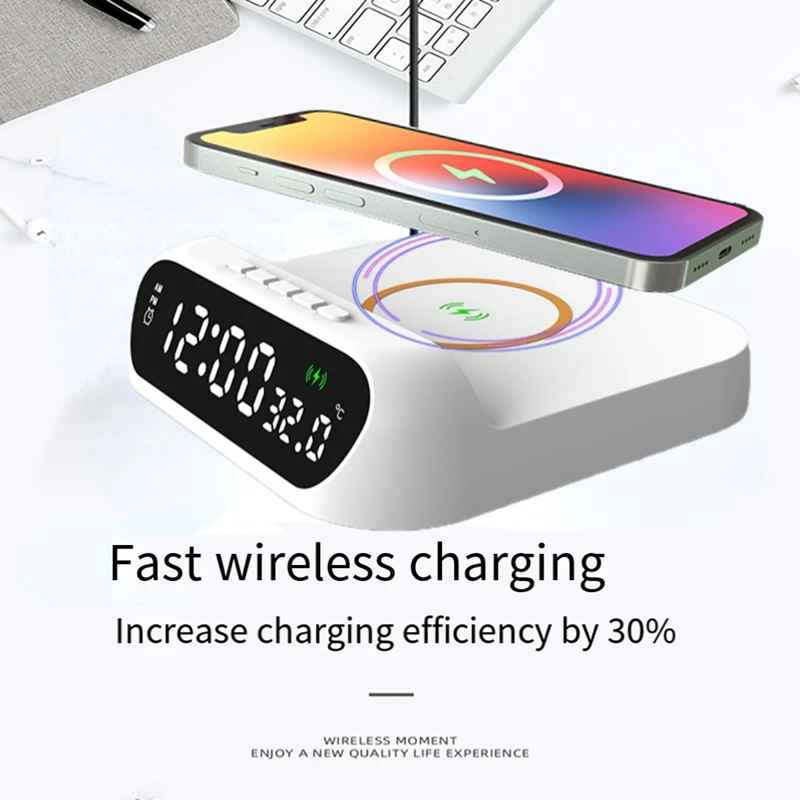
3-in-1 Wireless Charging Alarm Clock
$38.00 Shop Now →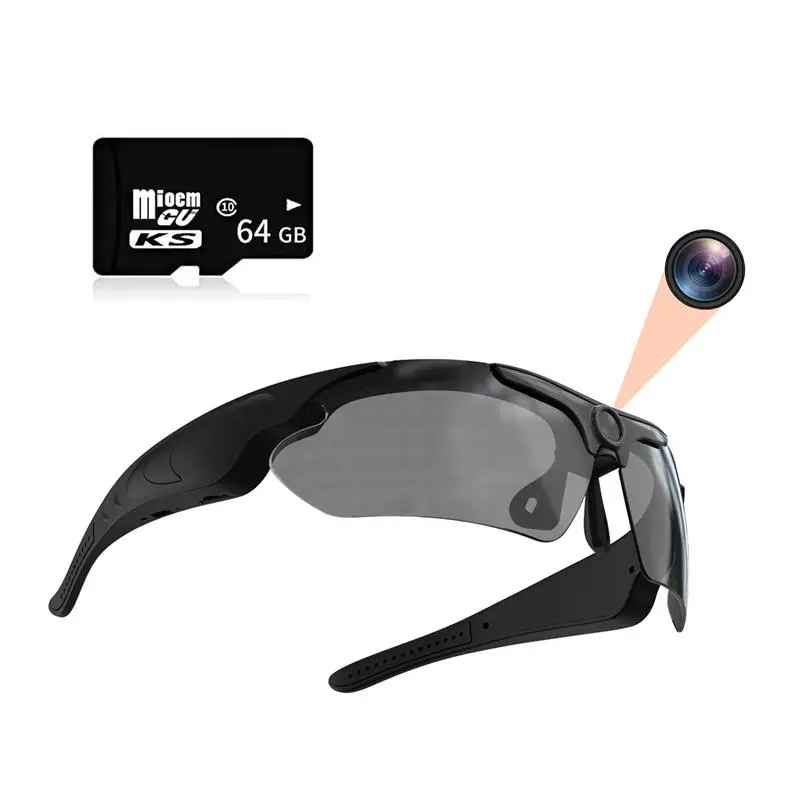
Smart Recording Glasses 1080p + 64GB
$75.00 Shop Now →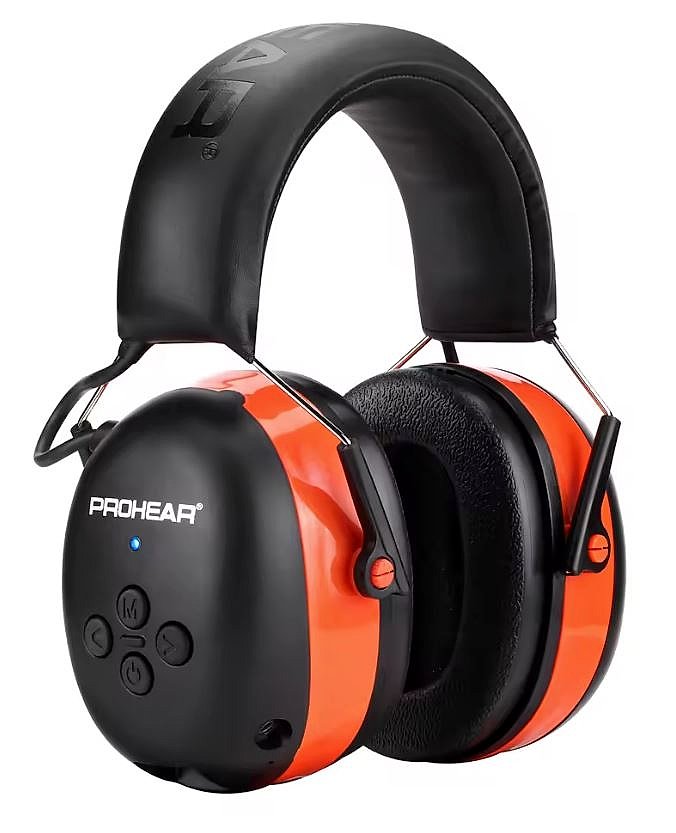
PROHEAR Bluetooth Safety Earmuffs
$70.00 Shop Now →Add Some Cosmos to Your Room
13 projection modes, silent operation, and a built-in timer. Your ceiling will never look the same.
Browse the ShopFrequently Asked Questions
How big of a room can the galaxy projector cover?
The projector covers most standard bedroom-sized rooms effectively. With standard 8–9 foot ceilings, it fills the ceiling fully when placed on the floor or a low surface across the room. For rooms larger than 15 x 15 feet, you may notice some dimming at the edges of the projection. For dedicated coverage of very large rooms, placing the unit closer to the center of the space helps.
Is it bright enough to use as a night light?
Yes — the mid-level brightness setting provides enough ambient light to navigate a room safely in complete darkness. It is not meant to replace functional overhead lighting for tasks like reading, but as a night light for children or as a low-level orientation light, it works well. The lowest brightness setting is specifically gentle enough for sleeping environments.
Can you use it during the day?
Technically yes, but it is designed for dark or low-light environments. In a bright daytime room, the projection will be washed out and largely invisible. Blackout curtains or evening use is where it genuinely shines. In a darkened room at any time of day, it performs just as well as it does at night.
Does it make noise (fan or motor)?
The auto-rotate feature uses a very quiet motor, and nearly all users report it as effectively silent in normal room conditions. There is no cooling fan. If you are in a completely silent room and concentrating, you may detect a faint mechanical hum during rotation, but in practice — with any ambient sound like air conditioning, white noise, or soft music — it is inaudible.
Is it safe for a baby's nursery?
Yes. The projector operates at safe, low-heat LED temperatures, has no exposed bulbs, and the light output at its lowest setting is gentle enough not to interfere with infant sleep. The auto-timer (up to 90 minutes) allows it to shut off after the baby falls asleep without requiring you to re-enter the room. It is one of the most nursery-appropriate uses of this product.