Amazon has 350 million products. Temu adds thousands daily. TikTok Shop is an infinite scroll of promoted listings. And yet, the hardest part of online shopping in 2026 isn't finding something — it's finding something good.
This is the paradox of abundance. More selection doesn't mean better outcomes. It means more time wasted, more returns, and more regret purchases. The solution isn't smarter algorithms. It's smarter curation.
The Problem with Infinite Selection
Psychologist Barry Schwartz called it the paradox of choice: more options lead to worse decisions and lower satisfaction. That was 2004. Two decades later, online marketplaces have turned the paradox into an industry-wide problem.
Here's what infinite selection actually costs you:
- Decision fatigue — browsing 47 "similar" products to find the one that's actually well-made
- Quality uncertainty — no way to tell real quality from a product photo and paid reviews
- Time cost — the average shopper spends 2+ hours researching before a $30 purchase
- Return hassle — 20-30% of online purchases get returned, mostly due to quality mismatch
"The future of e-commerce isn't infinite selection. It's intentional selection at scale."
How Curation Changes the Game
A curated marketplace does the editing before you ever see a product. Someone with expertise evaluates each item against criteria that matter: materials, craftsmanship, value for price, and uniqueness.
The result is a smaller catalog where everything is worth buying. Instead of 50,000 "minimalist desk lamps," you see 12 — and any of the 12 would be a solid purchase.
Curation Benefits for Buyers
- Less time shopping, more satisfaction — every product has been pre-vetted
- Lower return rates — products match expectations because quality is consistent
- Discovery instead of search — find things you didn't know you wanted
- Trust by default — the store's reputation is on the line with every listing
Curation Benefits for Sellers
- Less competition per listing — you're not buried under 10,000 identical products
- Higher conversion rates — buyers trust curated catalogs more
- Fair economics — BigMoetsy charges just 5% vs. Etsy's 6.5%+ or Amazon's 15%
- Brand alignment — being selected for a curated store is social proof
The Economics of Curation
Mass-market platforms make money on volume. They need millions of listings to capture long-tail search traffic. This creates a race to the bottom on quality — sellers cut corners to compete on price in a sea of identical products.
Curated platforms flip the model. Fewer products, higher quality, better margins. When BigMoetsy charges only 5% commission, sellers keep 95 cents of every dollar. Compare that to Amazon, where sellers keep as little as 85 cents after the 15% referral fee.
That 10% difference isn't just about seller profits. It flows through the entire experience:
- Sellers use better materials because they can afford to
- Products have higher quality because margins allow it
- Prices stay competitive because there's room in the economics
- Buyers get better value without paying premium prices
Who Wins: Curated or Mass Market?
Both have a place. If you need AA batteries or a phone charger, Amazon's infinite selection makes sense. The product is a commodity — any will do.
But for home decor, gifts, handmade goods, specialty tools — anything where taste and quality matter — curated wins. You're not buying a commodity. You're making a choice that reflects your taste. And when every option is good, the choice itself becomes enjoyable instead of exhausting.
This is why curated marketplaces like BigMoetsy are growing. Shoppers are tired of the firehose. They want someone to edit for them.
Frequently Asked Questions
What is a curated marketplace?
A curated marketplace is an online store where every product is hand-selected by editors or buyers before being listed. Unlike mass-market platforms like Amazon or Temu where anyone can list anything, curated marketplaces vet products for quality, uniqueness, and value. BigMoetsy is an example, curating across home decor, tech, tools, and handmade goods.
Why is curated shopping better than algorithm-based recommendations?
Algorithms optimize for what gets clicks, not what's actually good. They create filter bubbles and promote sponsored products over quality ones. Curated shopping uses human judgment to select products based on quality, craftsmanship, and value — resulting in higher satisfaction rates and fewer returns.
Do curated marketplaces have higher prices?
Not necessarily. BigMoetsy charges only 5% seller commission — lower than Etsy (6.5%+), Amazon (8-15%), or eBay (10-13%). Lower fees mean sellers can price competitively while maintaining quality. You often pay similar prices for significantly better products compared to mass-market alternatives.
How does BigMoetsy curate its products?
BigMoetsy evaluates products across four criteria: quality of materials and construction, uniqueness compared to mass-market alternatives, fair pricing relative to value delivered, and seller reputation. Products that pass all four criteria get listed. The result is a focused catalog where everything is worth buying.
Is the future of e-commerce curated or mass-market?
The market is splitting. Mass-market platforms will always exist for commodity goods. But for categories where quality matters — home decor, gifts, handmade items, specialty tools — curated marketplaces are growing faster. Shoppers are experiencing decision fatigue and increasingly prefer stores that edit for them.
Shop These Picks on BigMoetsy
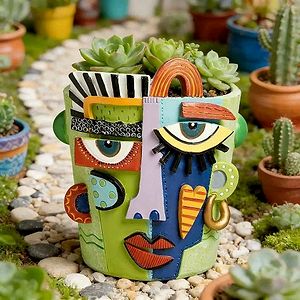
Abstract Face Decorative Planter
$40.00 View product →
Real-Touch Calla Lily Stems (Set of 10)
$22.00 View product →
Handmade Turkish Mosaic Stained Glass Lamp
$63.00 View product →
DIY Mini Museum Memory Display Kit
$44.00 View product →Experience curated shopping
Every product hand-picked. Every category worth browsing. Free Shipping on All Orders.
Browse BigMoetsy